
Contents
Overview
Adverse selection is a market phenomenon where one party possesses crucial, undisclosed information that gives them an advantage over another party in a transaction. This information asymmetry often leads to suboptimal outcomes, particularly in markets for insurance, finance, and labor. For instance, individuals with higher health risks are more likely to seek comprehensive health insurance, driving up premiums for everyone. Similarly, in lending, borrowers with a higher risk of default are more likely to seek loans. This can lead to markets collapsing, as the informed party exploits the uninformed party, causing prices to rise or fall to unsustainable levels, and potentially driving honest participants out of the market entirely. The concept, first rigorously explored by economists like George Akerlof in his seminal 1970 paper on the market for lemons, highlights a fundamental challenge in economic contracting.
🎵 Origins & History
The concept of adverse selection, though its formal economic articulation is relatively recent, has roots in practical observations of market inefficiencies dating back centuries. Early insurance markets, particularly marine insurance in the 17th and 18th centuries, grappled with the problem of ship owners knowing more about their vessel's seaworthiness and cargo risks than insurers. The development of actuarial science in the 18th century, pioneered by figures like Edmond Halley with his work on life tables, represented an early attempt to quantify risk and mitigate information asymmetry. The work of George Akerlof in his 1970 paper, "The Market for Lemons: Quality Uncertainty and the Market Mechanism," published in the Quarterly Journal of Economics, is widely considered the foundational text, using the used car market as a prime example.
⚙️ How It Works
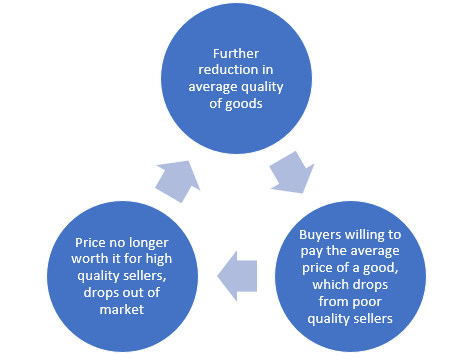
Adverse selection operates on the principle of asymmetric information, where one party in a transaction has more or better information than the other. In insurance, for example, potential policyholders know their own health status, risk behaviors, and likelihood of filing a claim far better than the insurance company. This leads to individuals with a higher probability of experiencing a loss being more likely to purchase insurance, while those with lower risk are less inclined to do so, especially as premiums rise to cover the higher-than-average claims. The insurer, unable to perfectly distinguish between high-risk and low-risk individuals, must set a premium that reflects the average risk of the pool. This average premium is too high for low-risk individuals, who then opt out, leaving a pool of predominantly high-risk individuals. This dynamic can spiral, leading to escalating premiums and potentially market collapse, a phenomenon Akerlof termed the "lemons problem."
📊 Key Facts & Numbers
The economic impact of adverse selection is substantial, often leading to market inefficiencies and reduced transaction volumes. Studies on the Medicare Part D program have shown that enrollment patterns exhibit adverse selection, with beneficiaries who anticipate higher drug costs being more likely to enroll. Globally, the market for life insurance faces similar challenges, with individuals aware of terminal illnesses being more motivated to purchase policies. The used car market, as famously described by Akerlof, sees a significant portion of transactions dominated by "lemons" (low-quality cars) because sellers know their car's true condition, while buyers cannot easily ascertain it, leading to a lower average price for all used cars.
👥 Key People & Organizations
Several key figures and organizations have shaped our understanding of adverse selection. Milton Friedman also discussed related concepts in his work on consumer choice and market mechanisms. Organizations like the National Bureau of Economic Research (NBER) have published extensive research papers on the topic. Regulatory bodies such as the U.S. Food and Drug Administration (FDA) and the U.S. Securities and Exchange Commission (SEC) implement rules designed to mitigate adverse selection in pharmaceuticals and financial markets, respectively, through disclosure requirements and quality controls.
🌍 Cultural Impact & Influence
Adverse selection has permeated popular culture and discourse, most notably through the "lemons problem" metaphor. The concept extends beyond economics, influencing discussions in fields like political science regarding voter information and candidate selection, and even in sociology concerning social stratification. The idea that hidden information can distort outcomes is a powerful narrative, appearing in literature and film where characters exploit secrets or lack of knowledge for personal gain. The pervasive nature of this concept underscores its fundamental relevance to understanding human interaction and market dynamics.
⚡ Current State & Latest Developments
In contemporary markets, adverse selection remains a persistent challenge, particularly in the evolving landscape of digital economies and fintech. The rise of big data and artificial intelligence offers new tools for insurers and lenders to better assess risk and identify high-risk individuals, potentially reducing adverse selection. Sophisticated algorithms might predict an individual's future health or financial behavior with uncanny accuracy, raising ethical questions about data privacy and fairness. The ongoing debate around cryptocurrency markets and decentralized finance also touches upon adverse selection, as participants navigate varying levels of technical knowledge and information about project viability.
🤔 Controversies & Debates
The primary controversy surrounding adverse selection lies in the appropriate level of market intervention versus free-market principles. Critics of regulation argue that mechanisms like mandatory insurance pools or strict disclosure rules can stifle innovation and create inefficiencies. Conversely, proponents of intervention point to market collapses and consumer harm as evidence that markets, left unchecked, can fail to provide essential goods and services equitably. The debate intensifies when considering sensitive areas like healthcare, where access to insurance is often seen as a right, not merely a market commodity. Another point of contention is the ethical use of predictive analytics; while it can mitigate adverse selection, it also risks creating discriminatory practices based on inferred, rather than actual, risk.
🔮 Future Outlook & Predictions
The future outlook for managing adverse selection hinges on technological advancements and regulatory responses. As machine learning models become more sophisticated, they may offer more precise risk assessment, potentially enabling personalized pricing that better reflects individual risk profiles without excluding low-risk individuals. However, this also raises concerns about "digital redlining" and the potential for algorithms to perpetuate existing societal biases. Future markets might see the development of new contractual mechanisms, such as signaling and screening mechanisms, becoming more sophisticated and widely adopted. The ongoing evolution of blockchain technology could also play a role in enhancing transparency and reducing information asymmetry in certain transactions, though its widespread application to complex insurance or lending markets is still speculative.
💡 Practical Applications
Adverse selection has numerous practical applications across various sectors. In insurance, companies employ underwriting processes, medical exams, and questionnaires to gather information and price policies. Health insurance markets often use waiting periods, pre-existing condition clauses (though restricted by regulations like the ACA), and risk-pooling mechanisms. In lending, banks and financial institutions conduct cr
Key Facts
- Category
- economics
- Type
- topic