
Contents
Overview
The understanding of seizures stretches back to antiquity, with early descriptions found in ancient Egyptian medical papyri, such as the Ebers Papyrus (c. 1550 BCE), which documented conditions resembling epilepsy. The Greek physician Hippocrates (c. 460–370 BCE) was among the first to propose a natural, rather than divine, origin for epilepsy, attributing it to imbalances in the brain's humors. He famously wrote in "On the Sacred Disease" that "it is thus with regard to the disease called 'sacred': it has a natural cause, and its origin is from the same causes as that of other diseases." For centuries, epilepsy and seizures were often conflated and stigmatized, viewed as a form of madness or demonic possession, a perception that persisted in many cultures well into the modern era. John Hughlings Jackson meticulously observed and described seizure phenomena in the 19th century, correlating specific motor symptoms with localized brain activity, laying groundwork for modern neurology. The establishment of specialized epilepsy centers in the 20th century, such as the Boston Children's Hospital's epilepsy program, further propelled research and clinical understanding.
⚙️ How It Works
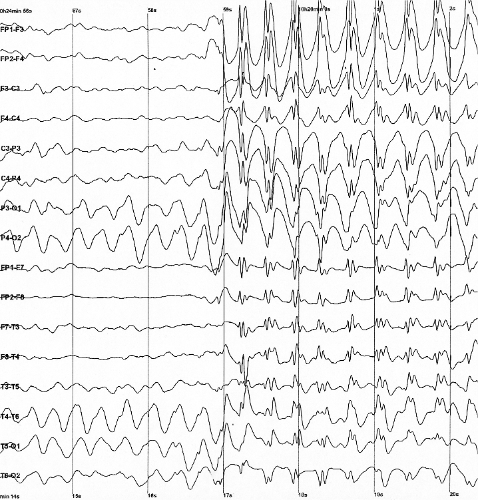
At its core, a seizure is an electrical event within the brain's intricate network of neurons. Neurons communicate via electrochemical signals, and during a seizure, a group of neurons fires excessively and in a synchronized, abnormal pattern. This synchronized firing can spread to adjacent brain areas, altering normal brain function. The specific symptoms depend on which brain regions are affected by this abnormal electrical activity. For instance, if the motor cortex is involved, it might trigger involuntary muscle contractions or convulsions. If the temporal lobe is affected, it could manifest as altered perception, memory disturbances, or emotional changes. The brain's normal state involves a delicate balance of excitatory and inhibitory signals; a seizure represents a temporary breakdown of this balance, leading to a surge of uncontrolled neuronal excitation. This abnormal electrical discharge can be visualized using electroencephalography (EEG), which records brain wave patterns, often revealing characteristic spike-and-wave discharges during a seizure.
📊 Key Facts & Numbers
Globally, seizures affect approximately 50 million individuals, making it a significant public health concern. Epilepsy, the most common cause of recurrent seizures, affects an estimated 1 in 26 people in the United States at some point in their lives, with over 3.4 million Americans living with the condition. In low- and middle-income countries, the prevalence can be even higher, with estimates suggesting that up to 80% of people with epilepsy live in these regions. The economic burden is substantial; in the US alone, the direct medical costs associated with epilepsy are estimated to be around $15 billion annually, not including indirect costs related to lost productivity. Approximately 10% of the global population will experience a single seizure in their lifetime, with a significant portion of these being provoked seizures. The incidence of new-onset epilepsy is highest in children under 10 and adults over 65, with distinct underlying causes in each age group.
👥 Key People & Organizations
Key figures in understanding seizures include John Hughlings Jackson, a 19th-century neurologist who pioneered the concept of localizing brain function based on seizure semiology. More recently, Jerome Engel Jr. has been a leading figure in epilepsy research, particularly in surgical treatments and understanding the underlying mechanisms of the disorder. Organizations like the Epilepsy Foundation in the United States and the International League Against Epilepsy (ILAE) play crucial roles in funding research, advocating for patients, and disseminating knowledge. The World Health Organization (WHO) also plays a role in global awareness and policy-making regarding neurological disorders, including epilepsy and seizures. Pharmaceutical companies such as UCB Pharma and Eisai Co., Ltd. are major players in developing and marketing anti-seizure medications, investing billions in research and development.
🌍 Cultural Impact & Influence
Seizures, particularly those associated with epilepsy, have long been shrouded in stigma and misunderstanding, impacting social inclusion and mental health for millions. Historically, individuals experiencing seizures were often ostracized, feared, or institutionalized. Culturally, seizures have been depicted in literature and film, sometimes sensationalized, other times portraying the lived experience with greater accuracy. For example, the portrayal of epilepsy in the film "Awakenings" (1990) brought a historical medical breakthrough to public attention. The advent of social media platforms like Reddit and dedicated online forums has created new avenues for individuals with seizures and epilepsy to connect, share experiences, and find support, fostering a sense of community and reducing isolation. This digital connectivity has been instrumental in raising public awareness and challenging long-held misconceptions about the condition.
⚡ Current State & Latest Developments
The landscape of seizure management is continuously evolving. In 2024, research is intensely focused on developing novel therapeutic strategies beyond traditional anti-seizure medications (ASMs), which can have significant side effects and are not effective for everyone. This includes exploring cannabidiol (CBD)-based therapies, such as Epidiolex, which has shown efficacy in specific seizure types like Dravet syndrome and Lennox-Gastaut syndrome. Advances in neurostimulation technologies, including vagus nerve stimulation (VNS) and responsive neurostimulation (RNS) devices, are offering new hope for individuals with refractory epilepsy. Furthermore, significant progress is being made in understanding the genetic underpinnings of various epilepsy syndromes, paving the way for more personalized and targeted treatments. The development of advanced AI-driven seizure detection algorithms, capable of predicting seizures before they occur, is also a rapidly advancing area, with potential to significantly improve patient safety and autonomy.
🤔 Controversies & Debates
One of the most persistent controversies surrounding seizures and epilepsy is the issue of stigma and public perception. Despite advances in medical understanding, many individuals still face discrimination in employment, education, and social settings. Another area of debate revolves around the optimal treatment strategies for refractory epilepsy, with ongoing discussions about the balance between medication efficacy, side effects, and the role of surgical interventions or neurostimulation. The precise definition and classification of seizure types, managed by the International League Against Epilepsy (ILAE), are also subject to periodic revision, reflecting evolving scientific understanding. Furthermore, the role of lifestyle factors, such as diet (e.g., the ketogenic diet) and sleep, in seizure control remains an active area of research and clinical discussion, with varying degrees of evidence and acceptance among practitioners.
🔮 Future Outlook & Predictions
The future of seizure management is poised for significant transformation, driven by advancements in precision medicine and technology. Gene therapy holds immense promise for treating inherited epilepsy syndromes, with clinical trials underway for conditions like Dravet syndrome. The development of closed-loop neuromodulation systems, which can detect and suppress seizure activity in real-time, is expected to become more sophisticated and widely adopted. Researchers are also investigating the potential of non-pharmacological interventions, such as advanced forms of cognitive behavioral therapy (CBT) tailored for epilepsy, to address the psychological comorbidities associated with the condition. Predictive seizure algorithms, leveraging we
Key Facts
- Category
- science
- Type
- topic