
Contents
Overview
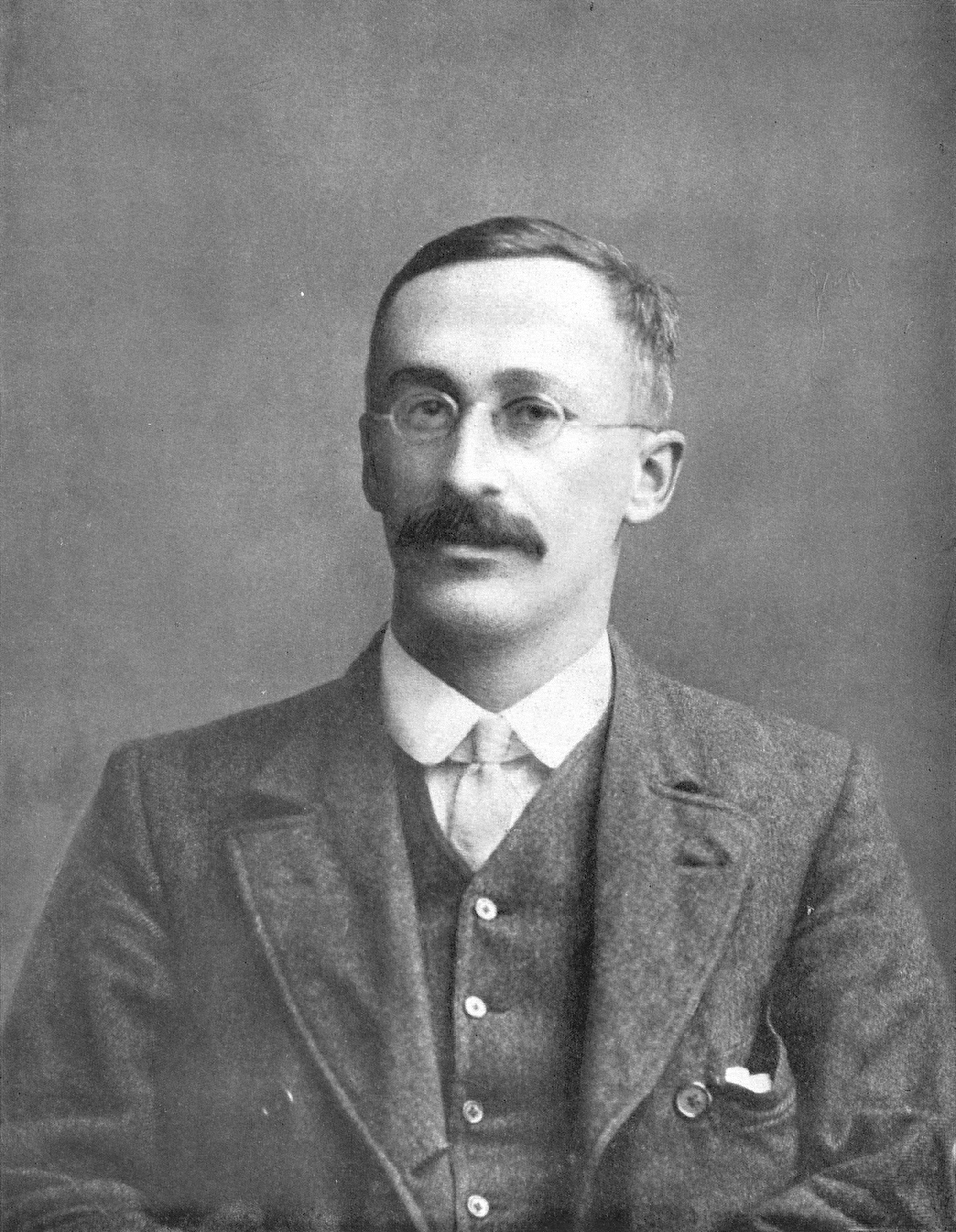
William Sealy Gosset, born in Canterbury, England, on June 13, 1876, was a pivotal figure whose work in statistics, though initially confined to the brewing industry, fundamentally altered scientific research. While employed as a chemist and brewer at the Guinness Brewery in Dublin, Gosset grappled with the challenge of drawing reliable conclusions from limited experimental data, a common problem in quality control and brewing. His groundbreaking solution, published under the pseudonym "Student", was the development of Student's t-distribution and the associated t-test. This statistical framework, introduced in his 1908 paper in Biometrika, allowed for robust analysis of small sample sizes, a significant advancement over existing methods that required much larger datasets. Gosset's contributions, initially met with skepticism, eventually became indispensable across numerous scientific disciplines, from medicine to engineering, earning him a posthumous legacy as a foundational figure in modern statistical inference.
🎵 Origins & History
William Sealy Gosset's journey into statistical innovation began in Canterbury, England. Educated at Winchester College and later at New College, Oxford, where he studied natural sciences, Gosset displayed an early aptitude for both scientific rigor and quantitative analysis. Upon graduating from Oxford, he was recruited by the Guinness Brewery in Dublin, a company renowned for its commitment to quality control and scientific methods. It was within the practical confines of brewing, where experiments were often costly and time-consuming, necessitating the use of small sample sizes, that Gosset encountered the statistical limitations of his era. His mother, Agnes Sealy Gosset, instilled in him a strong sense of intellectual curiosity that would fuel his pioneering work.
⚙️ How It Works
Gosset's most significant contribution emerged from his need to analyze data where sample sizes were too small for the established normal distribution (or Z-distribution) to provide reliable results. Traditional statistical tests, like Student's Z-test (which Gosset himself initially developed), assumed knowledge of the population standard deviation, often unavailable with small samples. His genius lay in deriving a new probability distribution that accounted for the uncertainty introduced by estimating the population standard deviation from the sample itself. This new distribution, which he termed "Student's" distribution (and later became known as the t-distribution), allowed researchers to make valid inferences about population means from small samples, a revolutionary concept at the time. The associated t-test provided a method to determine if the means of two groups were significantly different.
📊 Key Facts & Numbers
Gosset's statistical innovations were born from a need for efficiency and accuracy in a commercial setting. His seminal paper, "On the Probable Error of a Mean", appeared in the journal Biometrika, a publication dedicated to statistical research. This paper, along with subsequent works, introduced the concept of analyzing data from samples as small as n=2, a stark contrast to the hundreds or thousands of data points often required by earlier methods. The t-distribution's variance is inversely proportional to the sample size, meaning it becomes narrower and more closely resembles the normal distribution as the sample size increases, a critical property for its utility.
👥 Key People & Organizations
While Gosset himself was the primary architect of the t-distribution, his work was deeply intertwined with the scientific community of his time. His employer, Guinness Brewery, provided the practical context and, crucially, allowed him the intellectual freedom to pursue statistical research, even publishing under a pseudonym to avoid revealing proprietary industrial methods. Gosset corresponded extensively with other leading statisticians, most notably Ronald Fisher, who initially critiqued Gosset's work but later acknowledged its profound importance and helped popularize it. Fisher’s own contributions to analysis of variance (ANOVA) built upon the foundation laid by Gosset's small-sample methods. Gosset's academic roots were at Winchester College and New College, Oxford, where he studied natural sciences.
🌍 Cultural Impact & Influence
The impact of William Sealy Gosset's work, published under the pseudonym "Student", is immeasurable, extending far beyond the brewery walls. Before his t-distribution, statistical inference was largely inaccessible for experiments involving small numbers of subjects or trials, common in fields like medicine, agriculture, and psychology. Gosset's methods democratized statistical analysis, enabling researchers to draw meaningful conclusions from limited data, thereby accelerating scientific discovery. His pseudonym, "Student," became synonymous with the t-test, a term now recognized globally by scientists and researchers. The Guinness Brewery itself benefited from improved quality control and experimental design, but the broader scientific community reaped the most significant rewards, integrating the t-test into the standard toolkit of data analysis.
⚡ Current State & Latest Developments
As of 2024, Student's t-test remains a cornerstone of inferential statistics taught in virtually every introductory statistics course worldwide. While more advanced statistical techniques have emerged, the t-test continues to be a primary tool for comparing means, particularly in situations where sample sizes are small or the population variance is unknown. Software packages like R, Python (with libraries like SciPy), and SPSS routinely implement the t-test, making it accessible to a broad range of users. The ongoing relevance of Gosset's work underscores its fundamental robustness and applicability, ensuring its place in the statistical lexicon for the foreseeable future.
🤔 Controversies & Debates
The primary debate surrounding Gosset's work centers on its initial reception and the reasons for his pseudonym. While his employer, Guinness Brewery, supported his research, the broader statistical community was initially slow to adopt his findings. Some historians suggest that the secrecy surrounding industrial research and the novelty of his approach contributed to this delay. The choice of "Student" as a pseudonym was a deliberate attempt by Gosset to protect his employer's proprietary interests, as Guinness was hesitant to have its employees publish work that might reveal trade secrets. This practice, while understandable in its context, has led to a slight disconnect, with many users of the t-test unaware of the man behind the "Student" moniker.
🔮 Future Outlook & Predictions
The future of statistical analysis, while increasingly dominated by machine learning and big data techniques, will likely continue to see a role for Gosset's foundational work. As researchers encounter novel experimental designs or work with specialized datasets where large sample sizes are impractical or impossible, the t-test will remain a go-to method. Furthermore, the principles underlying the t-distribution—understanding uncertainty in parameter estimation—are fundamental to many more complex statistical models. The ongoing development of Bayesian statistics and robust statistical methods may offer alternative approaches, but the conceptual clarity and ease of interpretation of the t-test ensure its enduring relevance, particularly in educational contexts and for initial data exploration.
💡 Practical Applications
The practical applications of William Sealy Gosset's t-test are vast and pervasive. In medicine, it's used to compare the effectiveness of new drugs against placebos or existing treatments, even with small patient cohorts in early clinical trials. In engineering, it helps determine if changes in manufacturing processes lead to significant improvements in product quality or durability. Social scientists employ the t-test to analyze differences in survey responses between demographic groups, while biologists use it to assess variations in experimental outcomes, such as the growth rates of organisms under different conditions. Essentially, any field that conducts experiments with limited data can leverage the power of the t-test for statistically sound conclusions.
Key Facts
- Category
- science
- Type
- topic